
Equity Research
Rating: Buy | 12-M Price Target: $187 | Upside: +71% | Current Price: $109
Rating and Price Target
We are BUYING Alibaba with a 12-month price target of $187 per share. That's 71% above the stock's current price of around $109.60, and it's right in line with the Wall Street average.
Translation: Alibaba's cloud and AI business is growing faster than it has in years, the company's new Qwen AI models are attracting paying users and developers already, and Alibaba's commerce empire continues to generate tons of cash even as the company spends billions of dollars to construct AI data centers around the world. Short-term profits are going to look ugly as Alibaba dumps money into AI initiatives, but we believe those investments are part of a planned and well-funded push to own the next generation of tech, not symptomatic of a failed company. Recent announcements about a $10.2 billion stock sale to fund AI investments have spooked investors, and that's mostly why the stock is getting crushed right now. We believe the market is overly pessimistic about how those investments will pan out long-term.
Our View: The risk-reward here looks attractive to us given the market is essentially ignoring Alibaba's AI Cloud business as anything but a cost center. In reality, it's already contributing to profits. This is not a super aggressive call. The company has reported enough numbers that we are confident in projecting its ongoing profitability. We are less confident in estimating when Alibaba will start collecting significant revenue from international cloud customers. That takes a bit of guessing around customer acquisition assumptions.
Company Overview and Business Segments
Effective with Q2 2023, Alibaba reorganized its business into four segments:
Alibaba E-Commerce Group: This segment consists of Taobao and Tmall (the two large domestic e-commerce platforms), international e-commerce platforms such as AliExpress and Lazada, the Freshippo supermarket chain, and more recent investments in quick-commerce delivery businesses.
AI Cloud and Compute Services: This includes Alibaba Cloud (Alibaba’s AWS-equivalent cloud computing platform), and T-Head (Alibaba’s independent semiconductor chip design business). These businesses sell cloud storage, computing, and increasingly AI processing power using a combination of third-party chips and chips designed by T-Head.
AI Labs and Applications: This contains Qwen (Alibaba’s family of AI models), QwenWork (enterprise/workplace AI applications for businesses), and the Qwen app (consumer products for the general public).
All Others: Logistics affiliate Cainiao, food delivery service Ele.me, maps service Amap, and entertainment businesses such as Youku fall under this segment.
Joining Alibaba’s business segments together is its vertically integrated AI tech stack: Qwen runs on Alibaba Cloud’s servers, PAI is a platform that allows enterprises to customize AI models for their own purposes, T-head’s chip business lessens Alibaba’s dependence on foreign semiconductor chip providers, and Alibaba Cloud is aggressively expanding its international network of data centers to markets such as Brazil.
Since this reorganization was only implemented during the quarter ended June 20 26, forward revisions may occur to past-period financials as Alibaba adjusts segment reporting in future filings.
Our View: We believe this reorganization will help investors better understand and value Alibaba, as it now clearly has two main avenues for growth: AI infrastructure and seamless commerce. It also allows investors to easily value the company’s e-commerce business without the losses from other investments clouding its profitability. While we view the former as a small positive, we are cautious on how rolling up loss-making quick-commerce investments with high-margin advertising could obscure how profitable Alibaba’s core e-commerce business truly is.
Recent Financial Performance
Below is a simplified snapshot of Alibaba's last four reported quarters, using Alibaba's own fiscal calendar, which runs from April to March.
The most important number here is the cloud segment's growth rate. In the quarter ended June 2026, AI Cloud and Compute Services grew 45%, its fastest pace in more than five years, and now makes up roughly 18% of Alibaba's total revenue, up from about 13.5% a year earlier. Profit from that segment (measured on an adjusted basis) more than doubled compared to the prior year, showing that the business is not just growing but getting more efficient as it scales. AI-related product revenue alone reached about $1.8 billion in that quarter, equal to roughly a third of Alibaba Cloud's revenue from outside customers. Management has said it wants AI to eventually make up more than half of all cloud revenue within about a year.
To pay for the expansion, Alibaba spent about $10 billion on capital expenditures in that one quarter alone, a 75% jump from the year before. That is a big reason free cash flow has swung to a large negative number recently. Reported profit and earnings-per-share both fell well short of what analysts expected. Looking further out, over the next three to five years, most estimates expect Alibaba's overall revenue to keep growing in the high single digits to low double digits per year, with the cloud and AI business growing much faster than the rest of the company and becoming a bigger share of total profit over time. Management has set a longer-term goal of surpassing $100 billion combined from cloud and AI revenue within five years.
Our View: We see this mix of numbers as bad for near-term reported profit but good for the multi-year growth story. The fact that cloud revenue growth hit a multi-year high while cloud profit more than doubled is the strongest evidence supporting our Buy rating, because it shows AI spending is already turning into real, profitable revenue rather than just being an expensive bet. We are less sure exactly how long the current period of negative cash flow will last, since that depends on how quickly this spending slows down.
Growth Drivers and Strategic Bets
Cloud Computing Alibaba Cloud has about a 36% share of the domestic AI cloud computing market, more than double that of its nearest Chinese competitor. The size alone should allow Alibaba to provide pricing/performance that undercuts smaller players (something we view as an authentic advantage).
Artificial Intelligence Alibaba's family of AI models, called Qwen, ranks among the most widely used Chinese AI models based on several usage and developer-adoption metrics. And while competitors are experimenting with selling AI chips/models/API access to developers, Alibaba makes many of its largest Qwen models "open-weight." Open-weight allows developers to download and freely run these models. Alibaba builds developer loyalty and creates a natural funnel of future cloud customers who will eventually pay to run those models on Alibaba's servers. Fast commerce, which offers lightning-fast local delivery, has been seeing compound annual growth rates of between 45% and 56% in recent quarters. Meanwhile improvements in advertising revenues are cushioning the blow from weaker overall shopping activity. To be sure, one assumption we are making is that we think Alibaba is overspending on AI today before there is sufficient demand from paying customers. We expect meaningful conversion of spending into outside-cloud customer revenues to begin around fiscal year 20:28, not this year. Alibaba's indigenous chip design unit, T-Head, is helping the company become less reliant on Western chipmakers such as Nvidia, which are unable to sell their latest and greatest chips in China due to U.S. export restrictions. It's smart to hedge its exposure, but we'll believe that T-Head can fully replace Nvidia at scale someday. Outside of China, Alibaba is tiny relative to Amazon Web Services, Microsoft Azure, and Google Cloud, and lags far behind them in trust among large non-Chinese enterprise customers. Alibaba also faces heavy domestic competition from PDD, JD. com, ByteDance's Douyin, and Meituan, all of which are pouring money into AI.
Our View: We think Alibaba Cloud. Our view that Alibaba can maintain its lead position in China's cloud market is fairly confident, while our view about Alibaba Cloud's international prospects is more speculative. We believe Qwen's open-weight approach creates future revenue and competitive-position advantages for Alibaba. We are counting on historical industry trends to play out again regarding Alibaba Cloud internationally; AWS, Azure, and Google Cloud have too much of a lead in trust and installed infrastructure outside of China to commit much on that front.
Capital Allocation and Balance Sheet
Alibaba went from having strongly positive free cash flow two years ago to negative free cash flow today primarily due to an enormous increase in capital expenditures investing in AI data centers and chips. Alibaba financed this spending partially by selling $10.2 billion worth of new stock in Hong Kong in late August 2026, the largest stock sale ever in Hong Kong. Alibaba plans to use all of the proceeds from the sale to continue investing in AI infrastructure. Because of this stock sale, existing shareholders were diluted by about 3.6%, and each share now owns a slightly smaller percentage of the company.
Chairman Joe Tsai and CEO Eddie Wu also bought shares around the time of the stock sale worth over $25 million combined. Tsai's stake is now around 1.44% of the company. Insider ownership across executives and board members is around 12.5% of the company. Alibaba does have a small annual dividend, but it yields less than 1% at current prices. Share buybacks will likely be on hold for the time being considering how much capital is going towards AI expansion.
Our Take: Funding this buildout with mostly stock rather than debt is prudent and conservative given the circumstances, even though it dilutes shareholders in the near term because it does not put additional financial risk on the company while cash flow is negative. Tsai and Wu buying shares alongside the company is a very mild vote of confidence in the plan, but the amounts they spent are trivial compared to the $10.2 billion being raised, so we wouldn't place too much emphasis on this factor alone.
Competitive Benchmarking
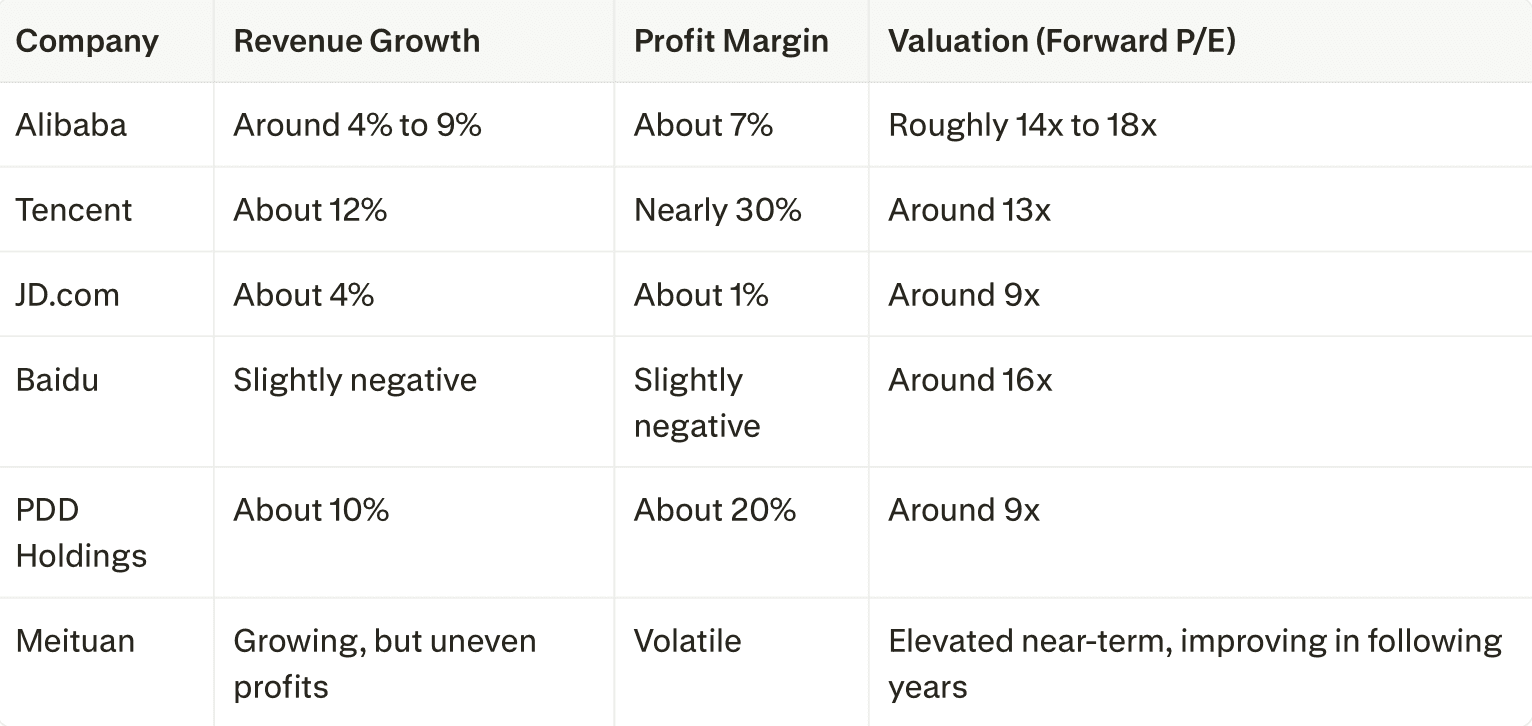

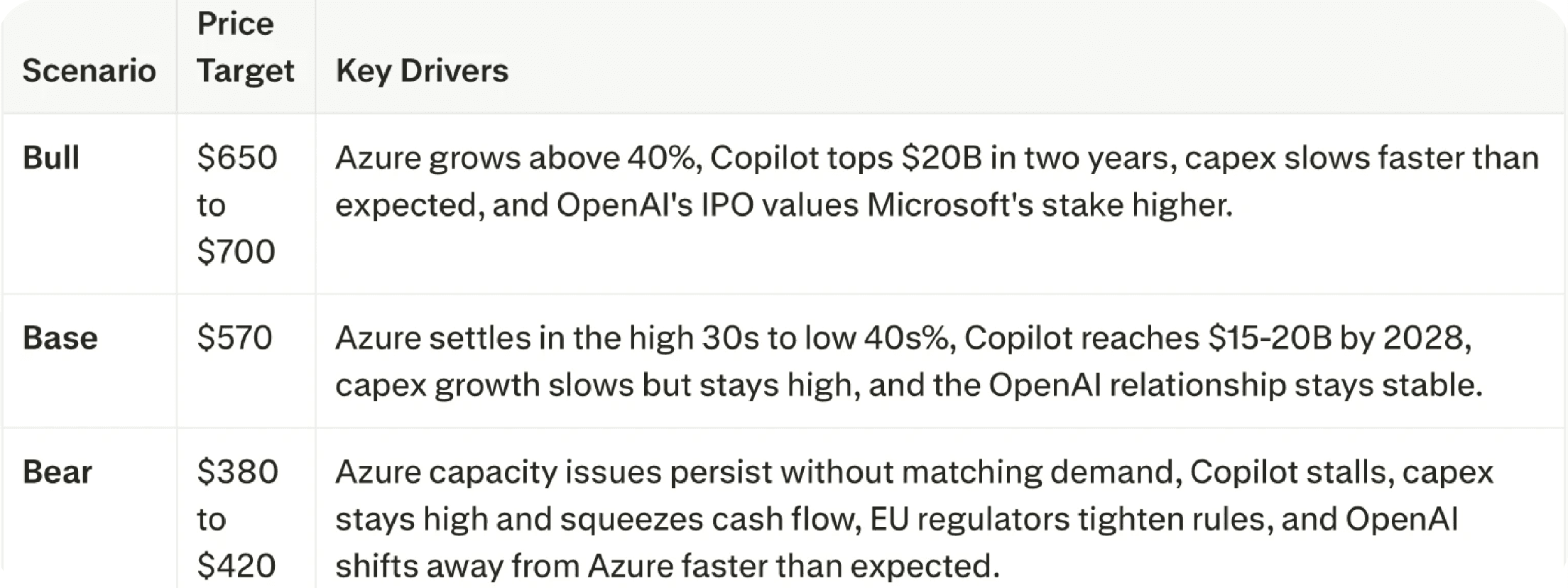
Our View: Base case is our most likely scenario given management has delivered cloud growth quarter after quarter despite significant spending. Bear case is a valid near term risk with negative cash flow today. We would reevaluate our rating if spending doesn't slow relative to revenue in the next few years.
Capital Market Signals
Wall Street analysts still have a fairly high average price target near ours and sell ratings are rare among large research firms. However, there is a large range of price targets from lows around $140 to highs above $225. That range reflects significant disagreement on the timing of when the AI spend will start producing returns, but isn’t the type of divergence that suggests Alibaba’s core business is questionable.
Joe Tsai and Eddie Wu also bought shares of Alibaba themselves around the time of this sale. SoftBank, Alibaba’s former largest shareholder with nearly 25% of the company around the time of Alibaba’s IPO, fully divested its stake between 2022 and 2024 and now owns no shares.
Our View: The insider purchases are a mildly positive signal that there is some confidence in Alibaba’s long-term outlook, but we don’t find it convincing on its own because the dollar amount is small relative to the overall stock offering. The range of analyst price targets suggests that the market hasn’t quite decided how to value Alibaba’s AI investments yet, which is consistent with our view that our forecast should only have moderate confidence.
Conclusion
We reiterate BUY on Alibaba (ATH263) with a $187 12-month price target, roughly 71% above current levels. Alibaba represents a stock for investors seeking core exposure to Chinese e-commerce with a speculative call on growth in AI infrastructure. While not a pure play AI stock by any stretch, Alibaba's cloud business effectively acts like a long option on the expansive AI buildout taking place throughout China. This is a valuable bonus sitting on top of what remains a dominant and highly cash generative shopping platform.